Engaging kids in discussions about personal choices—like tattoos and parenthood—offers profound insights into identity and freedom.
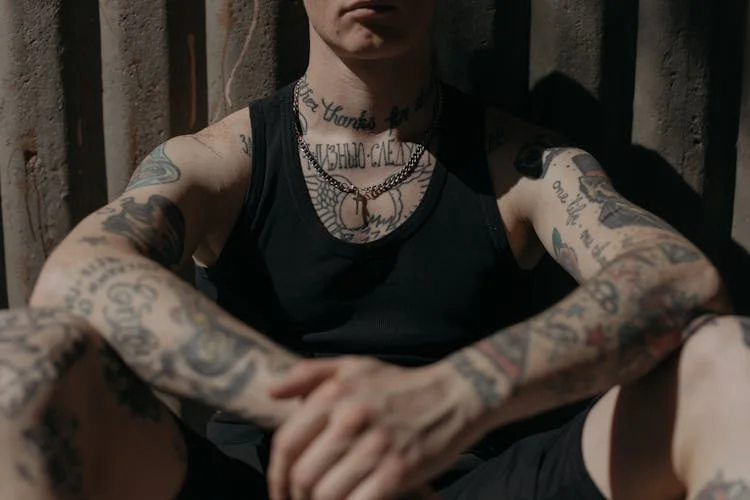
Recently, my kids developed a fascination for tattoos, spurred by the character Maui in Disney's Moana. His body art, deeply rooted in Polynesian culture, symbolizes his legendary feats. This led to some in-depth kitchen table discussions about tattoos as personal choices, contrasting with my wife's tattoo and my own decision to remain ink-free. Tattoos today aren't just aesthetic; they carry personal, cultural, and sometimes societal implications. They often represent a rite of passage, a form of expression, or even a disagreement with societal norms. For kids, the appeal is often about the visual allure and the stories these body arts can tell. It’s a viewpoint shaped by media, culture, and social trends, reflecting deeper meanings we sometimes overlook.
Exploring Tattoo Culture Through a Child's Eyes
We've explored various tattoo designs on the internet, from Disney motifs to tribal art, igniting curiosity in my children. For them, these images are intriguing and spark conversations about identity, art, and belonging. My son even boldly expressed interest in seeing tattoos deemed inappropriate for kids, a notable moment that made me laugh. This reflects his engagement with the idea that tattoos can evoke strong emotions and opinions. Children are naturally curious, and they often question the constraints of adult life, including what society deems acceptable. Here’s the thing: their inquiries challenge us to expand our own perspectives and confront our biases.
Play-Doh and Uncomfortable Questions
Amidst our tattoo discussions, my five-year-old daughter turned her attention to her Play-Doh. She innocently queried, "Dad, does everybody have to have a baby?" This unexpected question called for a delicate discussion about identity, choice, and the future. Children can pose inquiries that catch us off guard, revealing their developing awareness of the complexities of life and the choices that come with it. As parents, we often face the challenge of explaining these concepts in a way that’s authentic yet age-appropriate.
Taking a moment to collect my thoughts, I responded, "No, honey, people usually decide to have kids because they want to. You get to choose when you're older." Her response was ambivalent yet thoughtful; she sat quietly, contemplating my words. This moment encapsulated a fundamental truth: understanding the nuances of choice and responsibility isn’t innate; it’s learned through dialogue and reflection.
Answering Questions and Shaping Futures
I felt compelled to expand on the topic, describing how pursuing her passion—like becoming a gymnastics coach—might shape her decisions about having children. The reality of parenting involves commitment and time, which could clash with her dreams. We live in a time where conventional paths are increasingly questioned and redefined. Personal aspirations can often lead to challenging societal norms. If you’re working in this space, you realize how important it is to communicate these options to the next generation.
“Well, my brother will be in space, and I’ll be busy,” she replied, indicating her understanding of priorities while hinting at her aspirations. Kids have a way of synthesizing information, abstracting future possibilities with an optimism that often eludes adults.
Relaying this conversation to her mother later revealed that she was somewhat shocked, while I found it touching. It wasn't just a discussion; it was a moment of bonding where she sought answers from me. Such interactions are more than mere exchanges of information; they are foundational experiences that help shape children’s worldviews on complex matters. Parenting isn’t just about nurturing; it’s about guiding them through their evolving understanding of autonomy, choice, and potential.
It’s fulfilling to guide her as she contemplates her identity and future. I hope she carries the understanding that the best decision is to embrace who she wishes to be, free from societal expectations. It’s this growing awareness of self that equips children to navigate life's challenges with confidence and critical thinking.
The Importance of Open Conversations
Such discussions are vital in today’s rapidly changing world. As parents, we can't shy away from difficult topics. By fostering an environment of open dialogue, we empower our children to explore their identities. They grapple with the nuances of life early on, shaping their values and beliefs. The implications of these conversations extend far beyond childhood; they lay the groundwork for how they’ll approach life’s pivotal decisions. And this is the part most people overlook: the small, seemingly insignificant moments often have the biggest impact in the long run.
Ultimately, as they grow, these children will define their beliefs and make choices that reflect their values, supported by the understanding and freedom we've provided. They’ll face societal pressures and expectations, but our guidance can help them navigate these waters with integrity.
+ + +
This piece originally appeared on Kyle’s blog, Newfangled Dad, and was shared on the Chicago Dads Group blog. It’s part of the #NoDadAlone campaign to support fathers in recognizing they aren’t alone in their journeys. For more details, explore NoDadAlone.com.
Photo by cottonbro studio via Pexels.
Discussion
Sign in to join the discussion.