New insights reveal that school enrollment trends vary widely across districts, with educators highlighting both challenges and community needs.
Enrollment trends in schools are not uniform and depend heavily on the district and neighborhood in question. A recent survey conducted by We Are Teachers, which gathered the perspectives of over 500 educators from all 50 states, sheds light on the current dynamics affecting school enrollment across the country.
Current State of School Enrollment
The survey outcomes paint a mixed picture of school enrollment, revealing that growth, stagnation, and decline are all happening simultaneously based on geographical factors. Key findings indicate:
- 37% of schools reported an increase in enrollment.
- 28% experienced a decline.
- 30% noted that their numbers remained stable, while 5% were uncertain.
These shifts appear to be recent, with most significant changes occurring within the last three to five years. A middle school teacher from Maine summarized the problem succinctly: “We’ve had classrooms filled to the brim. I feel like we are not serving our students well when our attention is so divided.”
Reasons Behind Enrollment Shifts
Factors Contributing to Increased Enrollment
For those schools experiencing growth, educators offered several compelling reasons:
- 67% attributed the increase to population growth in their regions.
- 49% credited their school’s strong reputation or performance.
- 35% cited economic factors, such as families relocating for job opportunities.
Despite this growth, many schools struggle to provide adequate support and resources for the rising number of students. A striking 75% of educators noted that increased student counts heightened the pressure on already limited resources, with only 21% witnessing a corresponding increase in their budget.
Factors Leading to Declining Enrollment
Conversely, for schools that are losing students, the explanations vary significantly:
- 47% pointed to regional population declines.
- 44% indicated families opting for private, charter, or online education.
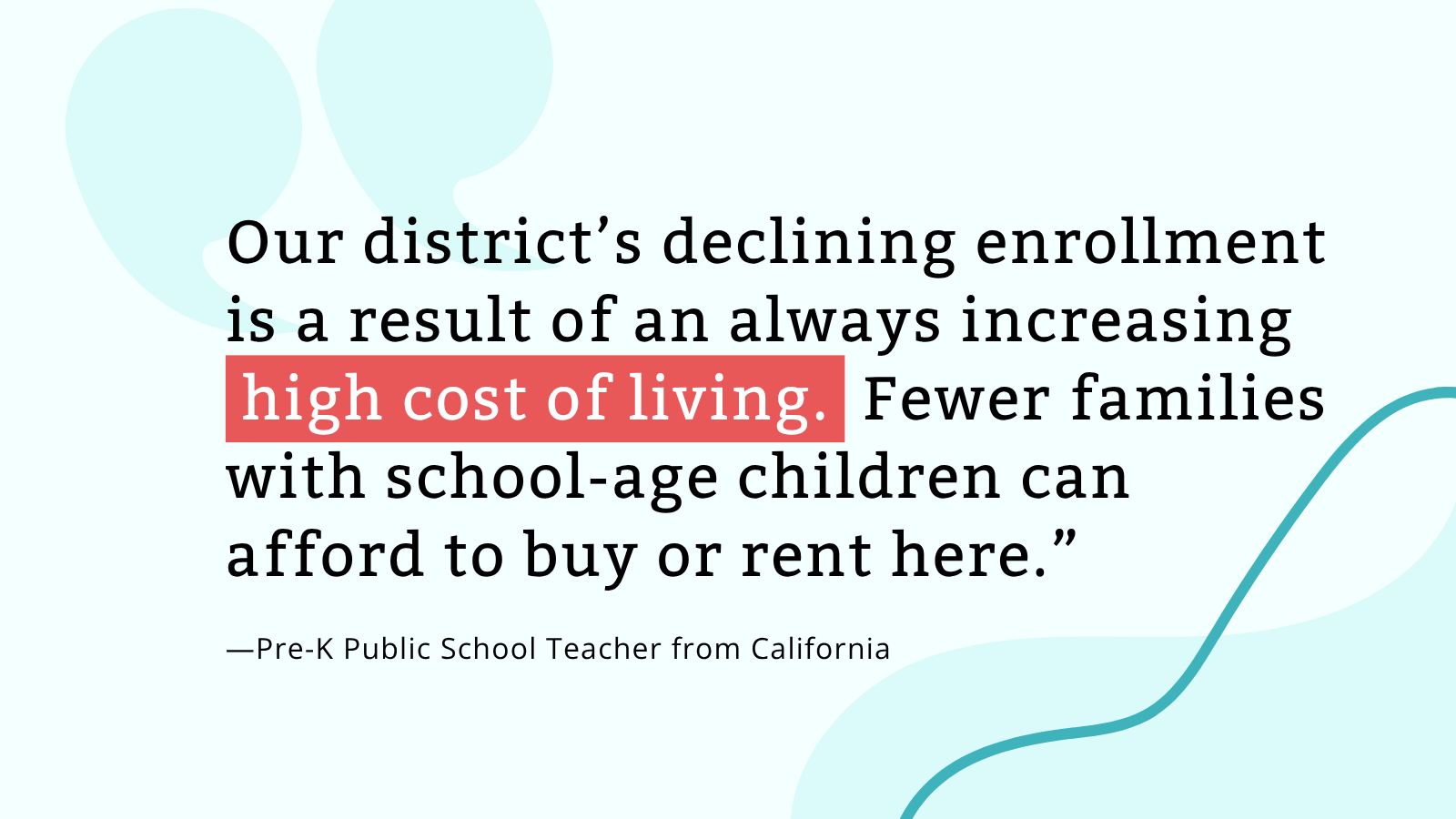
- 44% identified economic factors such as rising housing costs.
- Interestingly, only 9% blamed their school’s reputation—a misconception many hold.
The consequences of declining enrollment are profound. Nearly 72% of schools that saw a drop in student numbers reduced their staff, often losing experienced educators in critical support roles. Budget cuts impacted 62% of these schools, prompting leaders to prioritize essential functions and, in many cases, eliminate programs altogether.
Responses to Enrollment Changes
When it comes to responding to these changing enrollment numbers, response rates reveal a lack of coordinated action. Just under half of educators (47%) reported that their school or district took steps to adapt to these shifts, while about 33% remained unsure if any action had been taken. This uncertainty signifies a broader issue regarding the insufficient communication surrounding enrollment challenges.
Of those taking action, common strategies include:
- 51% engaging in marketing and outreach to attract families.
- 41% expanding their program offerings to accommodate more student needs.
- 42% partnering with local organizations for additional resources.
- 40% hiring new teachers to manage increased enrollment or fill vacancies.
However, it's essential to acknowledge that some changes have resulted in negative impacts, with 22% of schools cutting staff and 15% undergoing further consolidations or closures due to ongoing trends.
Educators' Perspectives on the Impacts of Enrollment Changes
Qualitative analysis of open-ended survey responses revealed significant themes regarding the emotional and practical impacts of these enrollment changes:
- More students, fewer supports: Teachers are feeling the strain as class sizes grow, support staff diminishes, and resources become more scarce.
- Budget cuts hit staffing first: Schools facing enrollment drops often resort to staffing cuts, impacting program availability significantly.
- Behavior and discipline are problematic: Increased enrollment and shrinking support roles lead to more significant challenges in managing student behavior.
- Teachers are excluded from planning: Many educators want a voice in decision-making but often find themselves sidelined in key discussions.
- Community trust is critical: Sustaining enrollment hinges on fostering relationships within communities; satisfied teachers contribute to a stable school environment.
The Need for Strategic Planning
Regardless of whether a school is growing or shrinking, the overarching message from educators is clear: Effective planning and support are crucial. Schools seeing an uptick need more resources and support staff, while those experiencing decline require protective measures against hasty cuts that can hinder recovery. Trust and communication within educational communities emerge as essential components of stabilizing school environments and responding to changing enrollment dynamics.
As one teacher poignantly noted, “You can’t stabilize enrollment without stabilizing the people inside the school first.” This statement encapsulates the pressing need for leadership to focus on nurturing both educators and the community at large, as these elements are foundational to student success and retention.
Discussion
Sign in to join the discussion.