Explore how the shape of an egg can withstand pressure and try the fun experiment to test its strength using just cling film.


An unbreakable egg might seem like a paradox. After all, eggs symbolize fragility, often breaking at the slightest mishap. Yet, with the right technique, you can create an egg that defies expectations. This concept plays into broader themes of perception versus reality, where the most ordinary items can display unexpected characteristics when manipulated correctly. If you’ve ever watched a child perform an ordinary task and been amazed by the results, this experiment will reflect that same spirit of simple wonderment fused with the laws of physics.
Creating Your Unbreakable Egg
You’ll need
- an egg
- cling film
Instructions
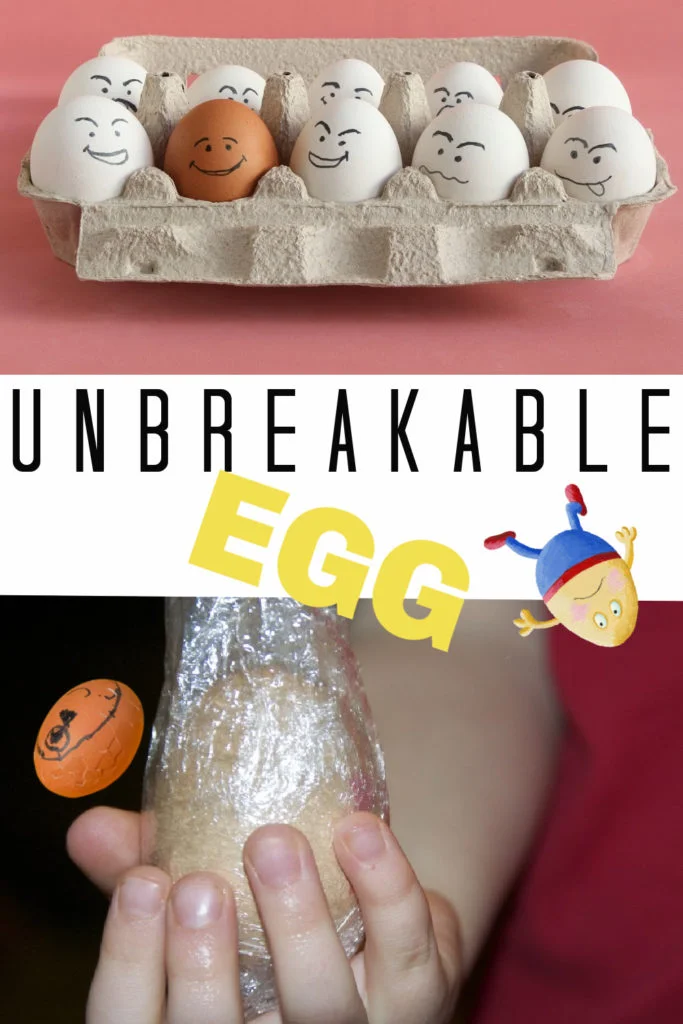
First, wrap the egg entirely in cling film. This layer acts as a protective barrier. Next, hold it in your palm, ensuring your fingers fully encase it. Now, squeeze with maximum pressure. Surprisingly, the egg should remain intact. This exercise fundamentally showcases how the uniformity of pressure allows the egg’s structure to withstand what seems like an inevitable break. For a fun challenge, try the same without cling film. This not only tests the limits of your expectations but also plays with a fundamental principle in science: that form and pressure can realign your understanding of fragile objects.

Why Does It Work?
Eggs have an inherent strength due to their shape. Their arch-like structure means that when pressure is applied evenly, it distributes across the shell. That's what makes it surprisingly resilient against cracking. Scientifically speaking, this isn’t just a quirk of nature. It’s a well-documented attribute in materials science. The egg’s curvature allows it to absorb and distribute stress effectively, a principle that applies to various engineering challenges. Even a significant force won't compromise the structure, as long as that force isn't concentrated on a specific point—like what happens when you drop an egg on a hard surface.
Despite intense squeezing, we found that the egg consistently held its form! This experiment resonates with core scientific principles and can lead to conversations about structural integrity in other contexts. How often do we overlook the significance of design in everyday items? You can draw parallels from this simple principle to engineering marvels ranging from bridges to airplane wings—all benefiting from the lessons that can be gleaned from the lowly chicken egg.
Experiment Ideas with Eggs
Consider these fun observations: a fresh egg sinks in water while a stale one floats. This floating phenomenon can serve as a hands-on lesson in density and buoyancy, engaging young minds in scientific reasoning. You can also distinguish between a boiled and unboiled egg based on their spinning behavior. The results provide an intuitive grasp on rotational inertia and the differences in mass distribution, concepts that can bewilder even seasoned adults. What this means for you, especially if you're working with kids or in educational settings, is a chance to harness curiosity into deeper learning.
For more experiments, learn about strong egg shapes or find out how to make an egg float using salt in water. These experiments showcase how regular ingredients can produce extraordinary lessons, bridging theory and practical application.
Don't miss out on these other engaging egg-related experiments. And this is the part most people overlook: the joy of scientific exploration lies not just in complex machinery or advanced labs, but in everyday items found at home. You can create an educational environment ripe for exploration with just a few simple ingredients.
Implications and Future Outlook
What can we take away from this amusing yet enlightening experiment? The simplicity of the unbreakable egg serves as a reminder that exploration need not be complex or costly. And yet, it does hold deeper implications for education and the way we think about scientific inquiry. By emphasizing the relationship between design and function, educators can foster a spirit of investigation among students that transcends the classroom.
As we look to the future of educational methods, this kind of tactile experimentation could inspire new curricula focused on hands-on learning. Science shouldn’t just be theoretical; experiments like these help build a foundation for critical thinking and creativity. Our everyday environments are replete with chances to test hypotheses, encouraging a mindset that thrives on exploration and curiosity. The lessons extracted from watching a child’s face light up at a successful experiment often surpass the information conveyed through traditional academic means.
The post Science Magic – the unbreakable egg appeared first on Science Experiments for Kids.
Discussion
Sign in to join the discussion.