Explore fun and educational pumpkin activities for kids that blend measurement, counting, and creative carving.
Exploring the World of Pumpkins
Recently, we visited a local farm to explore various pumpkins, weighing and measuring them before diving into some hands-on fun. The engaging farm atmosphere provided an excellent backdrop for an educational activity that connects children with nature, as well as fundamental scientific and mathematical concepts.
This type of learning experience does more than just entertain kids; it fosters curiosity and hands-on exploration. When children interact with the world around them, like picking pumpkins, they're not just gathering food— they're learning about weight, size, and biodiversity. The thickness of pumpkin skin, the varied hues, and their distinct textures embellish sensory experiences that can't be replicated in a classroom. In essence, this is an example of experiential learning in action.
Weighing and Measuring: The Hands-on Science
I handed two medium pumpkins to the kids, prompting them to guess which one was heavier. After their guesses, we used a scale to uncover the truth, and they were spot on. This simple act of weighing engages the young minds in mathematics. It encourages estimating and critical thinking—skills that are foundational in math education but often get overlooked in traditional settings.
Measurement, too, broadens understanding. In the subsequent activity, we measured the pumpkins' circumferences and compared them to Z's waist, wrist, and head. This kind of comparison furthers understanding in geometry and measurement—concepts that are often abstract and difficult for children to grasp through pictures and teaching alone. The heaviest pumpkin indeed had the largest circumference, and such observations pique interest in patterns and relationships in the physical world.
Engaging the Senses: A Deeper Connection

As we opened the pumpkin, Z described it as cold, orange, and squishy, providing an engaging sensory experience. Engaging children through different senses is often overlooked but vital. Each adjective reflects a unique quality of the pumpkin that ties into sensory learning—each one called on to describe an interaction with a natural object. This reinforces vocabulary, as well as boosts observational skills and creativity.
Moreover, the tactile experience of running fingers through pumpkin guts provides an understanding of texture and mass. So many school lessons can seem sterile—little wonder kids lose interest. Here, they become active participants in the learning process, which studies show can improve retention and engagement.
Counting Seeds: Mathematics in Action

Together, we extracted the seeds and organized them into groups of ten, turning the activity into a fun counting lesson. This activity seamlessly blends counting with exploratory learning, illustrating how math can be both fun and meaningful. Here’s the thing: this kind of elementary arithmetic practice might seem simple, but it sets the groundwork for more complex mathematical reasoning later in life.
Organizing seeds also introduces concepts of grouping, an essential foundation for understanding higher mathematical principles like multiplication and division. It’s the kind of hands-on exercise that keeps kids engaged without feeling like they’re in a structured classroom setting. Make no mistake: these moments are where foundational skills are built, often without the kids even realizing they’re learning.
Creative Expression: Carving Pumpkins
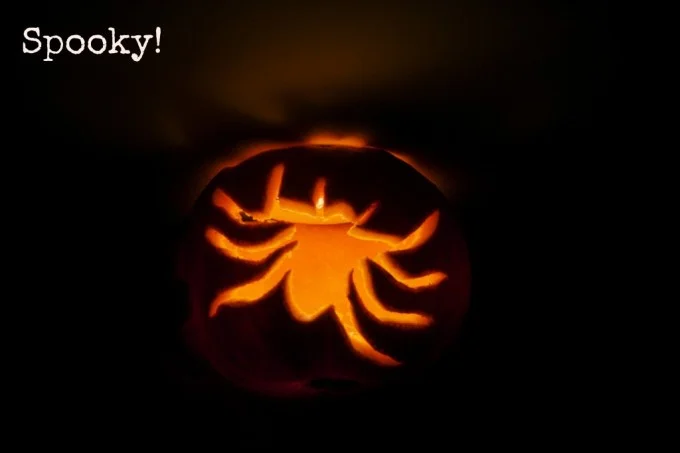
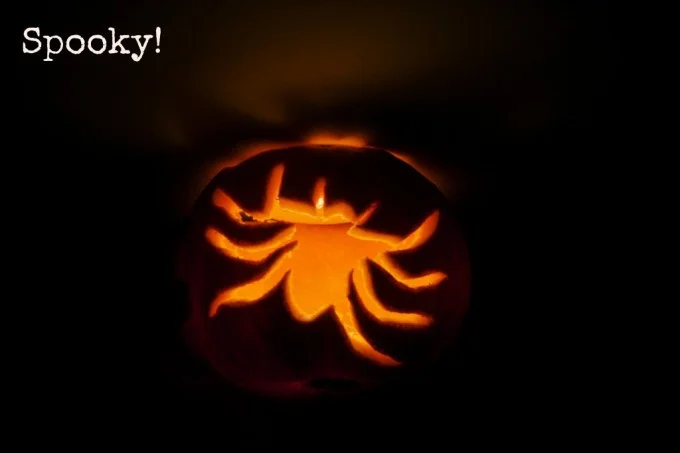
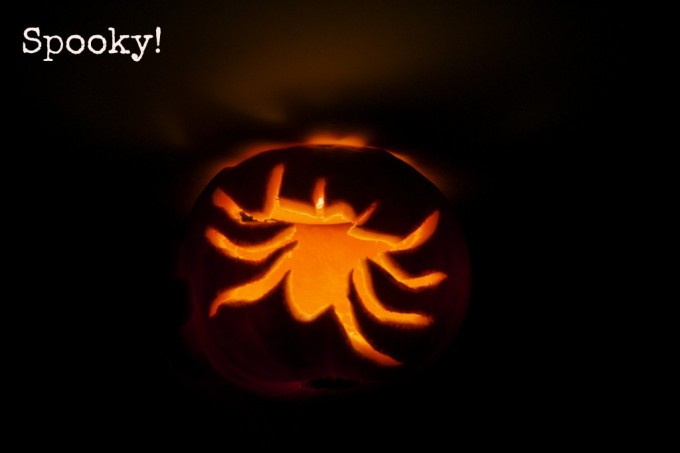
Finally, with some help, we carved a spider design into the pumpkin. What do you think of our creation? This element of creativity showcases the intersection of art and science—surely an educational win. Carving pumpkins might seem like a frivolous activity, but it cultivates fine motor skills and decision-making as children need to think critically about their designs and execute their plans effectively.
Additional Pumpkin Activities
Check out these non spooky pumpkins for further inspiration! Engaging in a variety of activities can help reinforce these lessons by providing dynamic contexts for application.
You might also enjoy this pumpkin invitation to play activity that engages creativity. Such activities turn pumpkins into classrooms where lessons on counting, sensory experiences, and even artistry take place.
Moreover, our easy pumpkin-themed lava lamps offer another exciting project. This adds a science experiment component that introduces concepts of chemical reactions and density. Kids often enjoy discovering the ‘why’ behind these fascinating phenomena.
Lastly, I’ve compiled plenty of ideas for what to do with leftover pumpkins! Sustainability in food practices is more significant than it looks—teaching kids to maximize pumpkin usage supports environmental stewardship.
Implications and Future Outlook
Engaging families through activities like these emphasizes the importance of experiential, hands-on learning that transcends traditional education. If you're working in this space, consider how easy it is to incorporate nature as a teacher. Such strategies could play a significant role in redesigning educational approaches that favor engagement over rote memorization.
As societal interest in educational innovation grows, methods like these might influence curricula far beyond seasonal activities. They help instill a lifelong love for learning in children, proving that education can be both fun and practically significant.
In years to come, the value of integrating such enjoyable, tactile experiences in learning may influence educational trends, shaping how caregivers and educators design activities to foster not just skills but a deep-rooted connection with the environment. An ideal model strikes a balance between fun and curriculum—this is the path we should continue on.
The post Engaging Learning Activities with Pumpkins for Kids appeared first on Science Experiments for Kids.
Discussion
Sign in to join the discussion.