Engage in a fun experiment that tests the varying flow rates of different fluids and learn about viscosity in a playful context.
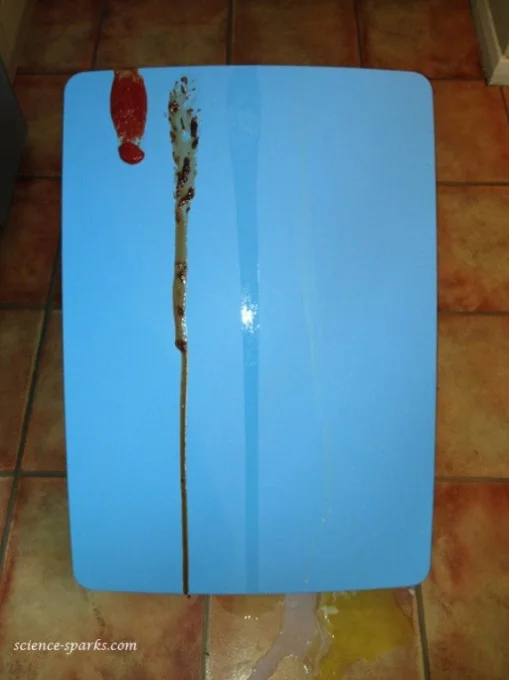
Understanding Viscosity Through Liquid Races
Ever found yourself frustrated trying to squeeze the last bit of ketchup from the bottle? That challenge stems from the thickness of ketchup, known as viscosity. This property defines how easily a fluid flows, and it varies greatly among common liquids. Viscosity isn't just about how easily a liquid leaves its container; it has real-world implications, affecting everything from how we consume products to industrial processes where fluid movement is critical. For instance, imagine the difficulty a chef might face in pouring a syrupy sauce versus pouring a thin broth. Understanding viscosity is not just a scientific exercise; it impacts our daily lives in tangible ways.
Setting Up the Experiment
Why not conduct a series of races to understand these differences in viscosity? For this experiment, you’ll need just a few simple materials, which makes it accessible for classrooms and at-home experimentation alike:
- A stopwatch and tape measure
- A ramp, which can be made from a table with the legs removed
- A selection of liquids, such as whole milk, ketchup, chocolate sauce, orange juice, and cooking oil
This setup allows for a comparative approach, where you can observe how fluids with different viscosities perform under the same conditions. Not only is this engaging, especially for kids, but it also serves as a hands-on introduction to fundamental physics principles.
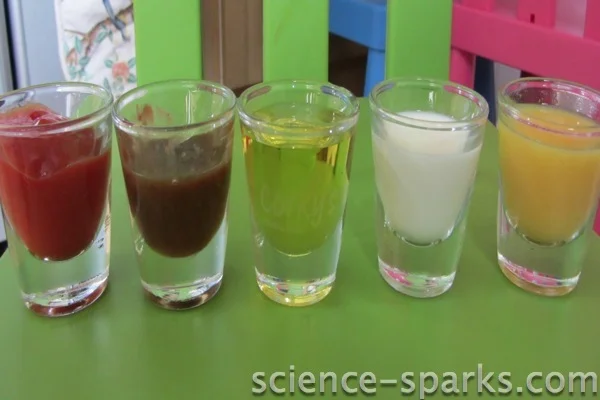
Measurement Options
- Measure the time it takes for each fluid to reach the bottom of the ramp
- Track how far the fluids flow over a set time
These measurement options offer insights into how viscosity directly influences fluid dynamics. By evaluating both time and distance, you can paint a clearer picture of how different liquids behave. For example, you might find that while ketchup takes longer to flow down the ramp, it may also cover a shorter distance compared to something like orange juice, which flows quickly but doesn’t accumulate as much volume at the base. This sort of analysis is beneficial for anyone interested in the practical applications of fluid mechanics.
Ensuring Fair Testing Conditions
To maintain fairness in your experiment, it's essential to consider several factors:
- Keep the volume of each fluid consistent
- Measure the flow over the same distance
- Observe the fluids for identical time intervals
- Repeat each trial three times to average the results
- Use the same ramp gradient for every test
Attention to detail in these areas will help produce reliable results. Consistency is key in scientific experiments, and even minor discrepancies can skew your understanding of how viscosity works. Moreover, this emphasis on precision mirrors best practices in professional scientific research, where replicability is a cornerstone of valid findings. Small variations can lead to vastly different outcomes too; for instance, if the angle of your ramp changes even slightly, it could influence how fast or slow the fluids flow.
Experiment Execution
You can either release the fluids one at a time, which simplifies timing, or pour them simultaneously if you prefer a more dynamic race to the finish. The latter option adds excitement but complicates the data collection process. It's not merely about which liquid flows fastest; it’s about understanding the interplay of viscosity and other environmental factors. After the set time, it’s vital to record your findings in a clear manner—tables and charts can help visualize the differences, making it easier for anyone reviewing the data to comprehend the results.
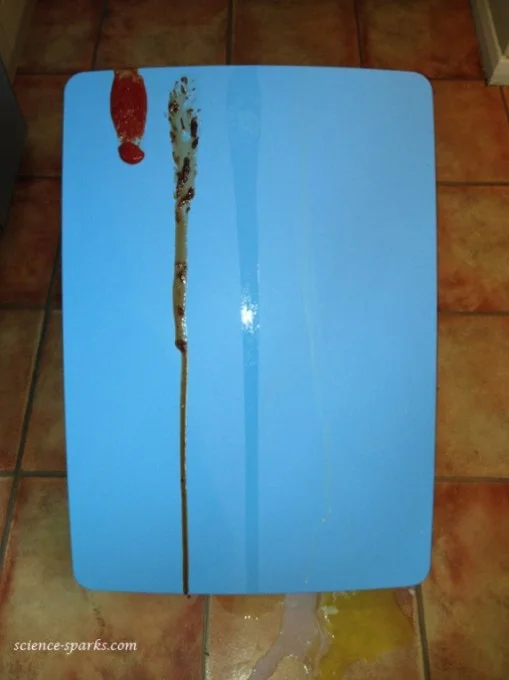
Recording Results and Observations
While conducting our tests, we decided to time how long it took for each fluid to reach the bottom. The ketchup, however, fell behind and didn’t flow as expected. This observation raises questions about why some liquids resist movement more than others. For future attempts, measuring the distance traveled instead might yield better insights. Tracking both time and distance could provide a holistic view of each fluid’s performance and enhance the educational value of the experiment.
Enjoy this fun and educational experience!
Kerry
The post Viscosity Races – investigating the flow of liquids appeared first on Science Experiments for Kids.
Implications and Future Outlook
Understanding viscosity opens doors to many real-world applications. From food science to engineering, knowing how different liquids behave under various conditions can be vital. For instance, devising sauces that flow effortlessly can greatly improve a chef's work, while engineers might need to ensure that industrial fluids can be pumped effectively without clogging machinery. The implications are extensive and suggest the need for more educational experiments like this one to deepen knowledge about such a fundamental property.
If you're working in this space or educating young minds, experiments that highlight viscosity could spark interest in physics and chemistry. What this means for you is understanding fundamental concepts through engaging and informative methods—knowledge that's useful across career paths.
Discussion
Sign in to join the discussion.