Explore the egg in a bottle experiment to grasp the principles of air pressure through a simple yet captivating demonstration.


Have you ever seen an egg magically drop into a bottle without touching it? This engaging experiment not only entertains but also serves as a vivid demonstration of air pressure concepts. It's a simple yet powerful way to introduce scientific principles to curious minds, particularly children, who often find such phenomena both intriguing and educational.
Understanding Air Pressure
Defining Air Pressure
Air pressure refers to the force that air exerts on any surface it contacts.
Air pressure plays a pivotal role in various scientific principles and everyday experiences. The earth's atmosphere exerts weight, which creates pressure. This pressure is not just a passive force; it actively affects objects, and manipulating it can lead to remarkable outcomes—like this experiment illustrates. Understanding air pressure can help explain weather patterns, how planes fly, and why drinking straws work. For many, these concepts feel abstract. But through visual experiments, the theory becomes tangible.

The Egg in a Bottle Experiment
The Egg in a Bottle Experiment
What You’ll Need:
1. A boiled egg
2. A clean glass bottle with a neck slightly smaller than the egg
3. Matches – it might take a few tries to get it right
As you gather these items, you're preparing not just for a neat trick but for a practical demonstration of physics in action. This experiment can be a stepping stone into deeper discussions about the nature of gases and temperature—turning this simple act into a comprehensive learning experience.
Experiment Steps
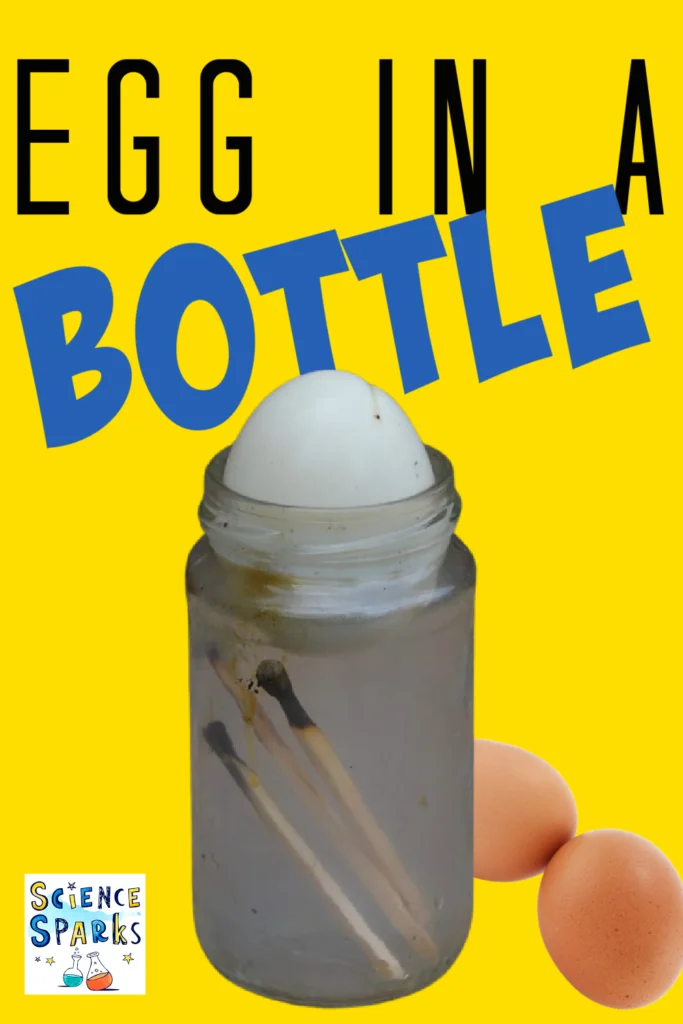
Begin by placing the boiled egg on top of the bottle to ensure it won't fall through. Next, with an adult's help, light a match and drop it into the bottle. Quickly position the egg on the mouth of the jar.
Pay attention now. Observe as the egg slowly descends into the bottle. Patience is key here, as the egg doesn’t drop instantly but should start to descend after a brief wait once the match extinguishes. This isn't magic—it's science at work, reminding us of the subtleties of air pressure changes that go unnoticed day-to-day.

Exploring the Science Behind It
The Science Behind It
When the match ignites, it heats the air in the bottle, causing it to expand and some to escape. Once the flame goes out, the air inside cools, leading to a drop in air pressure. It's a fascinating physical process that mirrors various principles found in atmospheric science. Essentially, as the air molecules inside cool, they become less energetic and collapse inward.
Consequently, the higher external air pressure pushes the egg downwards into the bottle. This highlights one of the fundamental principles of physics: pressure differentials drive movement. Such principles are foundational to various fields, from meteorology to engineering.
Importance and Broader Impact of This Experiment
This experiment serves as more than just an entertaining trick; it embodies essential scientific principles that can inspire curiosity in young learners. The hands-on approach makes complex topics accessible and encourages critical thinking. If you're working in this space, integrating such approachable experiments into educational curricula can highlight the relevance of science in everyday life. It's not just about textbooks and theory—it's about sparking interest that can lead to a lifetime of exploration.
(and this is the part most people overlook) Air pressure doesn’t just exist in isolated experiments; it influences everything from the weather to aviation. Thus, grasping its core concepts can significantly enhance a learner's understanding of the world around them.
Explore More
Check out additional air pressure experiments for kids. You can also try fascinating egg science experiments.
The post Egg in a Bottle Experiment appeared first on Science Experiments for Kids.
Discussion
Sign in to join the discussion.