This hands-on experiment showcases how raisins move in a glass of water using baking soda and vinegar, offering fun insights into a scientific reaction.
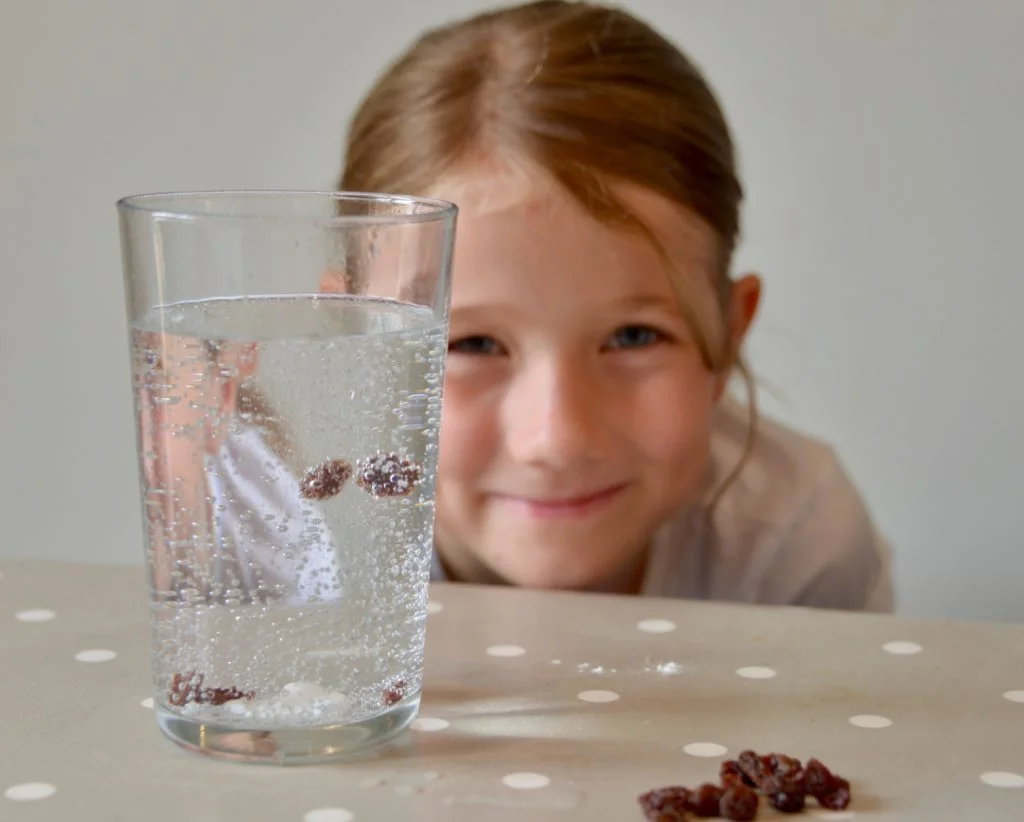
Raisins Dancing Experiment
Have you ever wondered what happens when you drop a raisin into a glass of water? Spoiler: it sinks! But can you make those raisins dance around? This simple experiment using baking soda and vinegar reveals that possibility. This type of experiment doesn't just delight children; it also serves as a practical introduction to essential scientific concepts like chemical reactions, buoyancy, and density.
Supplies Required
- A pint glass
- Warm water
- Raisins (or any other object you'd like to test)
- Baking soda
- White vinegar
To set up the experiment, you don't need anything fancy. Most of the materials are common household items. This simplicity makes it accessible, allowing anyone to engage with science in a hands-on manner without a trip to the store. Just gather these items, and you are ready to add a little bit of fun to your day.
Step-by-Step Instructions
To start, fill your glass halfway with warm water.
Add two heaped teaspoons of baking soda and stir well.
Drop in a handful of raisins.
Keep a tray underneath in case of overflow to catch any spills.
Finally, pour in a splash of white vinegar.
Watch the magic unfold as the raisins start to rise and fall! You'll notice this isn't just a simple trick; it’s a vivid demonstration of physical science at work, captivating observers both young and old.
Understanding the Reaction
So, what's behind the dance of the raisins? When baking soda and vinegar mix, they undergo a chemical reaction, creating carbon dioxide gas. The bubbles form and cling to the raisins, lifting them to the surface. Once these bubbles pop, the raisins sink back down, only to be lifted again as new bubbles form. This cycle continues until the reaction is complete. The visual nature of this reaction is a great hook for kids, allowing them to see science in action rather than just reading about it in a book.
Exploring Further
If you're curious, experiment with the smallest quantities of baking soda and vinegar necessary to achieve the desired effect. Can one raisin dance just as well as a handful? You might find that the number of raisins you use affects the dynamics of the activity. Try other dried fruits to see how they compare. During our testing, small LEGO pieces sunk but made their way to the top. Coins, however, remained still, merely collecting bubbles on their surfaces. This type of observation leads naturally to a conversation around density and volume and how different materials behave in the same environment.
Investigative Variations
What if you attached a small weight to a raisin? Would it still dance? By modifying the elements of the experiment, you're not just repeating the same process but rather diving deeper into scientific inquiry. This exploration can lead to surprising results and opens the door for additional fun experiments. Each variation teaches participants to think critically and modify their hypotheses based on what they observe.
Why the Reaction Occurs
When you combine an acid (vinegar) with an alkali (baking soda), they neutralize each other, resulting in the fizzing carbon dioxide gas you see bubbling up. This not only creates an engaging visual effect but also serves as a fascinating introduction to basic chemical reactions. For many students, chemistry can feel abstract, but experiences like this ground those concepts in tangible examples. Plus, there's something intrinsically satisfying about seeing the results of your actions in real-time.
Additional Experiments with Baking Soda
Looking for more ways to engage in science? Try hosting a Monster Tea Party or construct a baking soda powered boat. Everyone loves an exciting baking soda volcano, or you could explore fizzing rocks with baking soda. Each of these activities builds on similar scientific principles, reinforcing what students learn through the dancing raisins experiment.
Implications and Future Outlook
This experiment isn't just about making raisins dance; it represents a crucial educational tool. Science experiments that engage senses and inspire curiosity can foster a love for learning that stays with children throughout their lives. Engaging with science at a young age often leads to more interest in STEM fields later on, and that’s something educational professionals should consider. This method of learning can help bridge the gap for students who struggle with traditional teaching methods.
If you're working in this space, think about how simple experiments like this can be leveraged in educational curricula. Schools might consider integrating more hands-on science experiments that spark curiosity and facilitate inquiry-based learning. This needs to happen at all grade levels, not just in early education. By making science accessible and fun, we might just pave the way for the next generation of innovators and thinkers.
Try this experiment and enjoy the delightful surprise of dancing raisins!
Discussion
Sign in to join the discussion.