Discover the simple steps to create oobleck, a fascinating non-Newtonian fluid perfect for hands-on science activities and playful exploration.
Oobleck, often called cornflour gloop or slime, stands out as an engaging science experiment for both adults and kids. This tactile activity, requiring just two ingredients, makes it easily accessible and entertaining. Let’s explore what oobleck is, how to make it, its science, and creative play ideas!
Understanding Oobleck
At its core, oobleck is a blend of cornflour and water. This simple mixture transforms into a gooey substance that behaves like a solid when squished, yet flows like a liquid when allowed to move freely. What makes oobleck fascinating is its classification as a non-Newtonian fluid, which defies standard flow behavior. Non-Newtonian fluids can change their viscosity—notably, they can act both like a solid and a liquid under different conditions. This characteristic can be observed in everyday situations, like ketchup or toothpaste, where a change in force alters their flow. Oobleck provides a hands-on way for individuals, especially children, to engage with physics concepts in a visually and tactilely stimulating manner.
Materials Needed
- Cornflour
- Water
- Optional: Food coloring
- Optional: Ice cube trays for fun shapes
- A mixing bowl
- Optional: Tools like a colander or funnel for added creativity
Instructions to Create Oobleck
- Start by filling a cup with cornflour and pour it into your mixing bowl.
- Gradually add water while mixing with your hands until the consistency resembles a sticky, slimy gloop.
- If desired, add food coloring for a vibrant touch (just a heads-up—this can stain skin and clothing).
- Now for the fun part—experiment with how the slime behaves! Can you roll it into a ball? What happens when you drop it on the floor? You'll likely be surprised by its unpredictable behavior, especially as you vary the pressure applied to it.
The Science Behind Oobleck
One key observation while playing with oobleck is its dual nature: it feels solid when compressed but liquefies when released. This behavior can be directly attributed to the molecular structure of cornflour. When water is added, the starch molecules in cornflour form long chains that create a temporary structure, which is why applying force makes it harden. When you relax that pressure, the molecules can flow, turning back into a liquid form. Understanding these properties sheds light not only on the science of materials but also on broader systems where phase changes and reactions are critical. Engaging with oobleck can spark curiosity about other substances and their behaviors, encouraging further exploration in fields such as chemistry and material science.
Creative Play Ideas with Oobleck
There are numerous ways to explore oobleck beyond the initial mix:
- Try squeezing the gloop into a ball. When you open your hand, watch it ooze through your fingers—a captivating demonstration of its non-Newtonian properties.
- What happens if you freeze the gloop? Experimenting with temperature changes can yield surprising results, allowing for sensory play with the frozen Kool Aid oobleck. This adds another layer of excitement and an opportunity to discuss the science of freezing and melting.
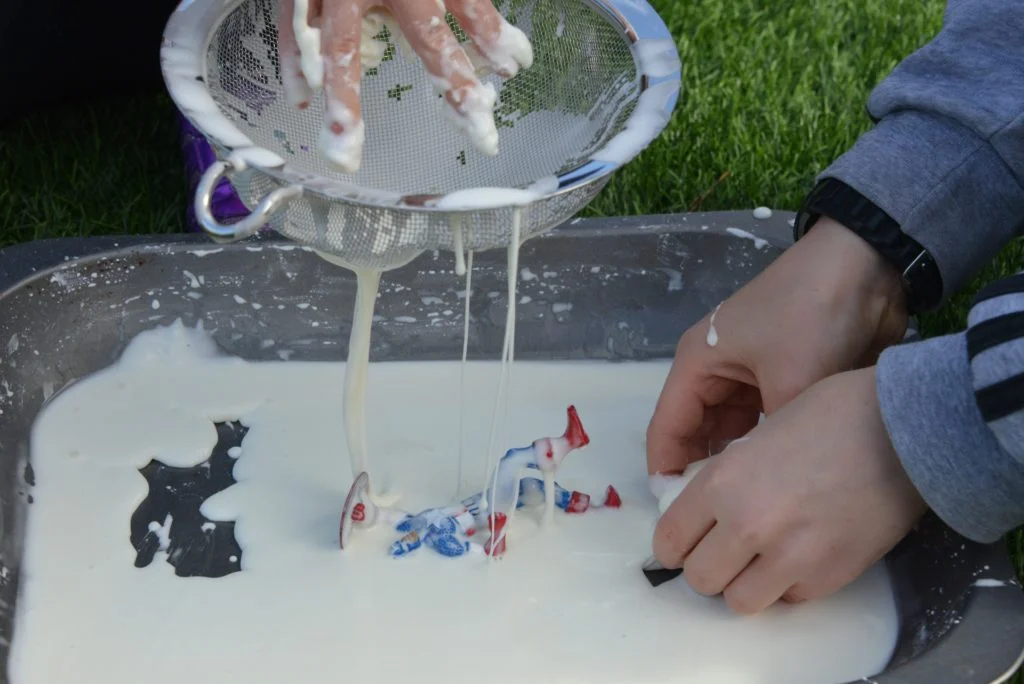
- Pour the ooze through a colander. Notice how it flows differently than water. As you pour, try to trap small figures in it for an additional challenge and to explore concepts of density.
- For a dynamic challenge, attempt to walk on a tray of oobleck! This activity not only amplifies the fun but provides insights into force distribution. (And this is the part most people overlook.)
After the Fun
Once you've wrapped up your oobleck activities, let it dry somewhere warm. Its behavior may change as it dries—a point worth observing for those keen on science. You can either save it for your next play session or dispose of it as you see fit. Cleanup is simple, but it’s wise to prepare your workspace ahead of time. If you’re intrigued by messy play, you’ll find plenty of other engaging science activities in our messy play ideas. Many of these activities employ similar principles, allowing for a deeper understanding of scientific concepts through play.
For a quick reference, a printable instruction sheet for making oobleck is available on the experiment instructions page. This can be a handy resource for educators and parents alike, ensuring they can recreate the experience with ease.
Implications and Future Outlook
The fascination with substances like oobleck goes beyond playful experimentation. As educational tools, these explorations can pave the way for greater interest in science and engineering among children. Engaging with materials that challenge conventional understanding cultivates critical thinking. If you’re working in this space, consider how you might expand on this concept with other non-Newtonian fluids or explore themes surrounding states of matter. Schools and parents have a unique opportunity to harness this curiosity, potentially impacting future STEM enrollment and careers. While oobleck may seem like a simple activity, its scientific implications are profound—a point that merits recognition and exploration for educators looking to spark long-term interest in science.
Discussion
Sign in to join the discussion.